Can Moissanite Pass as Diamond? What You Need to Know
When shopping for an engagement ring, many couples ask a critical question: “Can moissanite pass as a diamond?” Moissanite has become an increasingly popular alternative due to its brilliance, affordability, and ethical sourcing. However, because moissanite has unique optical properties, it can appear slightly different from a diamond under certain lighting or to a trained eye.
In this guide, we’ll explore the similarities and differences between moissanite and diamonds, helping you determine if moissanite can give you the look of a classic diamond ring without the steep price tag.
1. What is Moissanite?
Moissanite is a naturally occurring mineral, silicon carbide, first discovered in a meteor crater in 1893 by Henri Moissan. Today, virtually all moissanite available for jewelry is lab-created, making it ethical and environmentally friendly — see What Is a Moissanite Stone Made Of? Understanding This Sparkling Gem.
Key Characteristics of Moissanite:
Durable: 9.25 on the Mohs hardness scale (diamonds are 10), suitable for daily wear — see Moissanite Hardness Explained: Mohs Scale & How Durable Is This Gemstone.
Sparkly: High refractive index creates more “fire” (rainbow flashes) than diamonds — see Why Is Moissanite So Sparkly? Understanding Its Brilliant Shine.
Affordable: Costs significantly less than natural or lab-grown diamonds — see How Much Does Moissanite Cost? A Complete Price Guide.
Ethical: Lab-created, avoiding mining issues and environmental impact — see Is Moissanite Ethical? A Complete Guide to Sustainability, Sourcing, and Responsibility.
Because of these qualities, moissanite has become a favorite for couples who want a large, eye-catching stone without overspending — see What Is Moissanite? Your Complete Guide to This Brilliant Gemstone.
2. How Moissanite Compares to Diamonds
Visually, moissanite and diamonds share many similarities, but subtle differences exist:
| Feature | Diamond | Moissanite |
|---|---|---|
| Brilliance | Classic sparkle | Extra fiery, rainbow flashes |
| Hardness | 10 Mohs | 9.25 Mohs |
| Color | D–Z grades | Near-colorless, sometimes faint yellow/green tint in larger stones |
| Price | Expensive | Affordable, 70–90% cheaper |
| Refractive Index | 2.42 | 2.65–2.69 |
| Traditional Appeal | Classic, timeless | Slightly modern alternative |
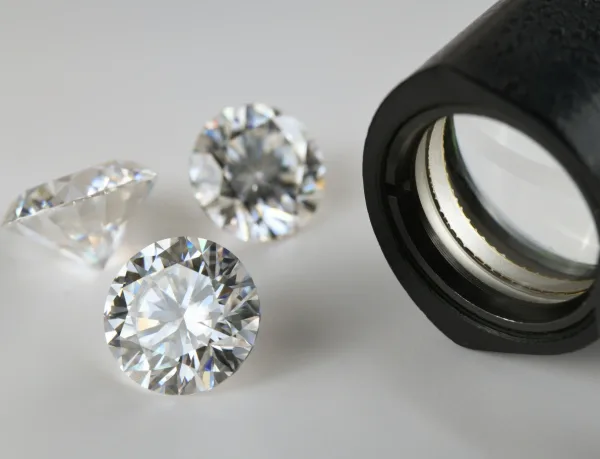
Because moissanite reflects light differently, it can sometimes appear more “rainbow-like” than diamonds. To the untrained eye, especially in casual settings, moissanite can convincingly pass as a diamond — see Can Jewelers Tell Moissanite from Diamond? Here’s What You Should Know.
3. Can Moissanite Fool the Eye?
For most people, moissanite looks just like a diamond in everyday life. Factors that help moissanite pass as diamond include:
Cut Quality: A well-cut moissanite can mimic the classic brilliance and sparkle of a diamond.
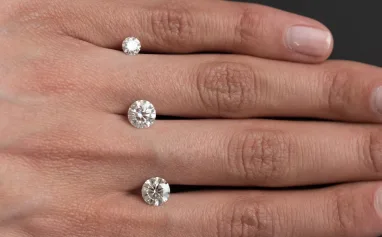
Size: Smaller stones (under 1 carat) are more likely to look like diamonds, as larger stones may display subtle color differences.
Setting: Halo, solitaire, or pavé settings can enhance the illusion, focusing attention on the sparkle rather than subtle optical differences.
While jewelers or gemologists can detect moissanite using specialized tools, the average viewer usually cannot tell the difference at a glance — see Does Moissanite Pass a Diamond Tester? What You Should Know.
4. Differences in Sparkle
The most noticeable difference between moissanite and diamonds is the type of sparkle:
Diamond Sparkle: Sharp white light reflections, often described as “crisp” or “classic.”
Moissanite Fire: Rainbow-colored flashes due to its higher refractive index, giving it a “disco ball” effect in bright lighting.
Whether this difference is an advantage or disadvantage depends on personal preference. Some people love moissanite for its dazzling fire, while others prefer the understated sparkle of diamonds — see Does Moissanite Glow Under UV? Understanding Fluorescence and What It Means.
5. Durability and Everyday Wear
Both diamonds and moissanite are durable enough for daily wear, but there are slight distinctions:
Diamonds: Hardest natural material, virtually scratch-proof.
Moissanite: Extremely durable, though slightly softer. Can develop tiny surface scratches over decades, but this is rare with normal use — see Does Moissanite Scratch Easily? Complete Guide.
With proper care, a moissanite engagement ring will last a lifetime and maintain its sparkle — see Does Moissanite Lose Sparkle? Complete Guide to Maintaining Brilliance.
6. Budget Benefits
One of the main reasons couples choose moissanite is affordability. Moissanite stones cost a fraction of diamonds, allowing you to:
Purchase a larger stone for the same budget
Invest in a more intricate setting or high-quality metal
Allocate savings toward wedding expenses, honeymoon, or other priorities
For example, a 1.5 carat moissanite can cost under $2,000, whereas a diamond of the same size can easily exceed $10,000 — see Moissanite Price per Carat: What You Need to Know.
7. Ethical and Environmental Advantages
Ethics and sustainability are increasingly important for engagement rings. Moissanite offers:
Lab-created, no mining impact
Reduced carbon footprint compared to mined diamonds
Conflict-free sourcing — see Is Moissanite Conflict-Free? Understanding the Truth About Ethical Gemstones
These factors make moissanite a compelling choice for couples who care about the environment and social responsibility.
8. Who Should Consider Moissanite?
Moissanite is perfect for:
Budget-conscious couples: Get a larger, dazzling stone without overspending.
Couples who love sparkle: Extra fire makes it eye-catching.
Ethically minded buyers: Lab-created, environmentally friendly alternative.
Modern or unconventional styles: Ideal for those who want a contemporary twist on a classic engagement ring.
It may be less ideal for traditionalists who value diamond-only rings or those who prefer classic white sparkle over rainbow fire.
9. Final Thoughts
Can moissanite pass as a diamond? Absolutely — for most people, in most settings, moissanite is indistinguishable from a diamond. Its brilliance, durability, and affordability make it a highly attractive choice for engagement rings.
Ultimately, the best ring is the one that reflects your love and fits your lifestyle, budget, and style preference. Whether you choose moissanite or diamond, the right stone will shine just as brightly as the commitment it represents — see Is Forever One Moissanite? for premium options.
Add comment