Are There Different Grades of Moissanite? A Complete Guide to Quality and Classification
If you’re shopping for a moissanite ring, you may be wondering:
Are there different grades of moissanite? For a detailed introduction to this gemstone, see What Is Moissanite? Your Complete Guide to This Brilliant Gemstone.
The answer is yes — but not in the exact same way as diamonds. While moissanite does not follow the traditional GIA diamond grading system, there are still important quality differences between stones that affect appearance, price, and overall value.
In this guide, we’ll break down how moissanite is graded, what factors matter most, and how to choose the right quality level for your needs.
Does Moissanite Have an Official Grading System?
Unlike diamonds, moissanite does not have a universally standardized grading authority like GIA or IGI. However, most moissanite is evaluated based on similar criteria:
- Color
- Clarity
- Cut
- Size (measured in carat weight equivalent or millimeters)
Retailers and manufacturers often classify moissanite into quality categories, even if those categories are not globally standardized. For more on quality distinctions, see Are All Moissanites the Same Quality? What You Need to Know.
1. Color Grades of Moissanite
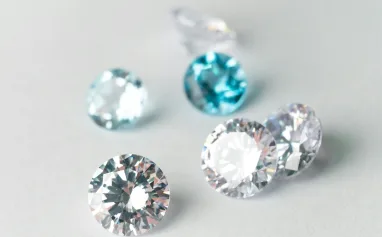
Color is one of the most noticeable differences between moissanite grades. Most moissanite is sold in three broad color categories:
- D–F (Colorless): Bright white appearance, closest visual match to high-quality diamonds, premium pricing
- G–H (Near Colorless): Slight warmth under certain lighting, still appears white in most settings, good balance of value and appearance
- I–J (Faint Warmth): Slight yellow or gray undertone, more noticeable in larger stones, lower price point
Higher-quality moissanite typically falls within the D–F or G–H range. For more about moissanite vs diamonds, see Is Moissanite a Real Diamond? Key Differences and What You Should Know.
2. Clarity Grades
Moissanite generally has excellent clarity due to its lab-created nature:
- Eye-clean
- Free from visible inclusions
- Structurally consistent
Some manufacturers may classify clarity as VVS (Very Very Slightly Included) or VS (Very Slightly Included). Visible inclusions are rare compared to natural diamonds.
3. Cut Quality
Cut is arguably the most important factor in how moissanite looks. A well-cut moissanite will display:
- Maximum brilliance — see Why Is Moissanite So Sparkly? Understanding Its Brilliant Shine
- Balanced fire (rainbow sparkle)
- Proper light return
Cut quality often has a greater impact on appearance than minor color differences.
4. Brand vs. Generic Moissanite
Grades also differ by manufacturer. Established brands focus on:
- Proprietary cutting techniques
- Strict color control
- Advanced faceting patterns
- Quality inspection standards
Generic or lower-cost moissanite may vary more in consistency and polish.
5. Old-Generation vs. New-Generation Moissanite
Earlier generations sometimes had noticeable undertones and less refined cutting. Modern moissanite typically offers:
- Improved color consistency
- Enhanced brilliance
- More diamond-like appearance
For durability insights, see Moissanite Hardness Explained: Mohs Scale & How Durable Is This Gemstone.
6. Premium vs. Standard Grades
Many retailers offer tiers such as:
- Premium
- Super Premium
- Forever-quality — see What Is Forever One Moissanite?
- Signature cut
These categories reflect differences in color control and cutting precision.
7. Does Size Affect Grade Appearance?
Yes. Larger stones may:
- Show more color in lower grades
- Display stronger rainbow fire
- Reveal cutting inconsistencies more easily
Smaller stones tend to mask slight warmth differences.
8. How Moissanite Grading Differs From Diamonds
Moissanite grading is:
- Less formalized
- Manufacturer-based
- Generally high in clarity
Color and cut are the primary grading factors.
9. How to Choose the Right Grade
Guidelines:
- Choose D–F if: Maximum whiteness, platinum or white gold settings
- Choose G–H if: Best value, warm metal tones, under 2 carats
- Prioritize Cut if: Maximum sparkle and brilliance
10. Does Higher Grade Mean Better Investment?
Moissanite is not typically an investment asset. Higher grades mainly affect appearance, not resale value.
Final Thoughts
Yes — moissanite varies in color, cut, clarity, and craftsmanship. When carefully selected, high-grade moissanite offers exceptional brilliance, durability, and beauty. For practical care, see How to Clean Moissanite Jewelry: A Complete Guide and Does Moissanite Lose Sparkle? Complete Guide to Maintaining Brilliance. For a timeless engagement option, explore First Love Moissanite Engagement Ring.