Moissanite vs Natural Diamond: Key Differences You Should Know
If you’re shopping for engagement rings or fine jewelry, you’ve probably wondered: “What is the difference between moissanite and diamond?” While both gemstones are beautiful and durable, they have distinct properties that affect their sparkle, price, and overall appeal. For a broader overview of all performance factors, you can also read our moissanite vs diamond complete comparison. Understanding these differences helps you make a choice that fits your style, budget, and values.
COMPOSITION AND ORIGIN
Moissanite is made of silicon carbide (SiC). It was first discovered in 1893 by French chemist Henri Moissan in a meteorite crater, which is why it bears his name. Today, nearly all moissanite used in jewelry is lab-created, ensuring consistent quality, ethical sourcing, and environmentally friendly production.
Natural diamonds, in contrast, are pure carbon crystals formed deep within the Earth over billions of years. While some diamonds are lab-created, natural diamonds are mined and often involve higher costs, environmental impact, and ethical considerations. If you are comparing lab-grown options specifically, see our guide on moissanite vs lab diamond for a deeper breakdown.
BRILLIANCE AND SPARKLE
Moissanite is known for its intense sparkle. If you want a dedicated light-performance analysis, explore moissanite vs diamond brilliance for detailed optical comparisons.
Key Properties
Refractive Index: Moissanite (2.65–2.69) is higher than diamond (2.42), meaning it bends and reflects more light.
Dispersion (“Fire”): Moissanite (0.104) has a stronger rainbow-like effect than diamonds (0.044).
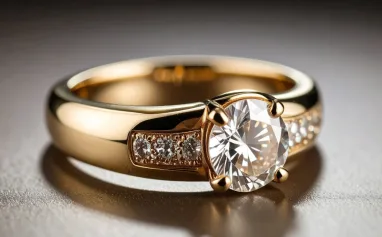
Appearance: Moissanite often produces colorful flashes that make it appear even more brilliant than diamonds in certain lights.
While diamonds have classic sparkle and subtle fire, moissanite is often more eye-catching due to its vivid brilliance. If you’re curious about visual differences in real-life lighting, you can also view a moissanite vs diamond side by side comparison.
HARDNESS AND DURABILITY
Feature Comparison
| Feature | Natural Diamond | Moissanite |
|---|---|---|
| Mohs Hardness | 10 | 9.25 |
| Scratch Resistance | Very High | Very High |
| Chip Resistance | High | High |
| Daily Wear | Excellent | Excellent |
Moissanite is extremely durable, suitable for everyday wear, and resistant to scratches and minor impacts, making it a practical diamond alternative. For a deeper look at long-term wear performance, read our comparison of moissanite vs diamond for everyday wear.
COLOR AND CLARITY
Diamonds: Available in colorless to fancy colors, graded on D-Z scale, with inclusions affecting clarity.
Moissanite: Typically near-colorless to colorless, lab-created, with few visible inclusions. Slight warmth may appear under certain lighting, but clarity is generally excellent. Some buyers also wonder about realism—our guide on does moissanite look fake compared to diamond explains what to expect visually.
PRICE COMPARISON
Price is a significant difference. For a detailed cost structure analysis, see our moissanite vs diamond price breakdown.
Natural diamonds: Expensive due to rarity, mining costs, and market demand.
Moissanite: Much more affordable, often 70–90% less than comparable diamonds, making it ideal for buyers on a budget who still want brilliance and durability. If you want to explore overall value differences, check out cost of moissanite vs diamond for a complete value comparison.
ETHICAL AND ENVIRONMENTAL CONSIDERATIONS
Diamonds: Mining may have environmental impacts and ethical concerns, including conflict diamonds.
Moissanite: Lab-created and ethically sourced, offering a sustainable alternative without compromising beauty. Many buyers ultimately ask why choose moissanite over diamond when weighing ethics and sustainability.
WHICH ONE SHOULD YOU CHOOSE?
Choose natural diamonds if you value rarity, traditional prestige, and long-term resale value. If resale potential is a deciding factor, you may also want to review moissanite vs diamond resale value.
Choose moissanite if you want maximum sparkle, affordability, durability, and ethical sourcing. If you’re still deciding overall, our in-depth guide answers the question is moissanite better than a diamond with a balanced perspective.
Both gemstones are stunning, but the right choice depends on your personal priorities.
CONCLUSION
Understanding the difference between moissanite and diamond helps you make an informed choice. Moissanite provides incredible sparkle, excellent durability, ethical sourcing, and affordability, while natural diamonds offer timeless prestige, rarity, and long-term value. If you’re specifically choosing for a proposal, see our guide on moissanite vs diamond engagement rings to help finalize your decision. Both are beautiful options, so your decision depends on what matters most to you.
Add comment